










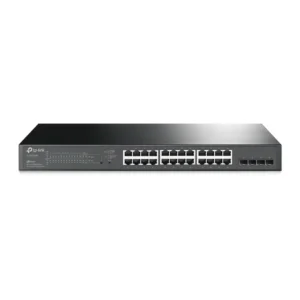
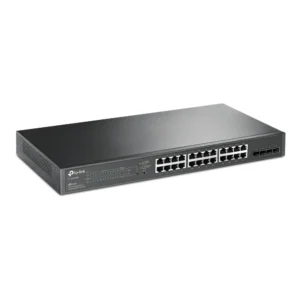

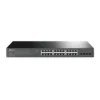
TP-Link Omada ACCESS SG2428P 28-Port Gigabit Switch with 24-Port PoE+
10,599 EGP
TP-Link Omada Access SG2428P smart-managed Gigabit switch with 24 PoE+ ports, 4 Gigabit SFP slots, 250W PoE budget, 56 Gbps switching capacity, VLAN, QoS, ACL, static routing, and centralized Omada SDN management.
In stock
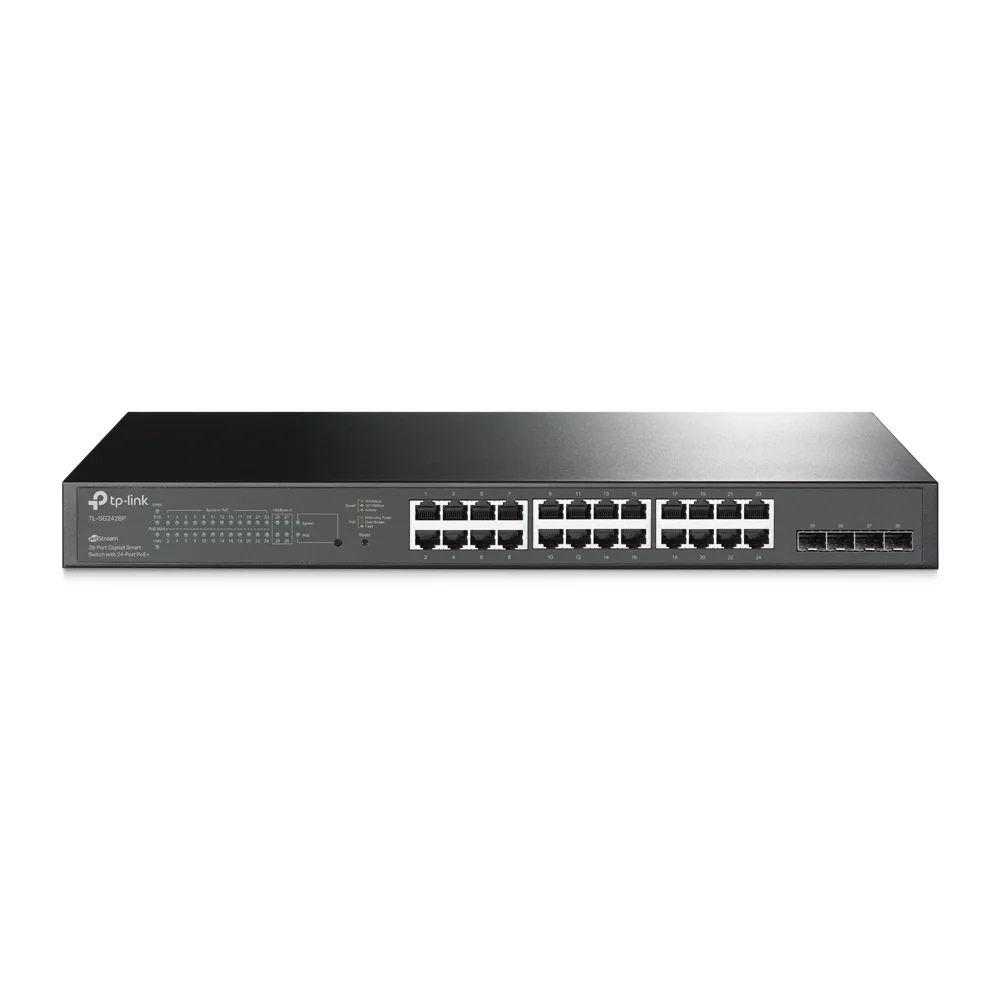
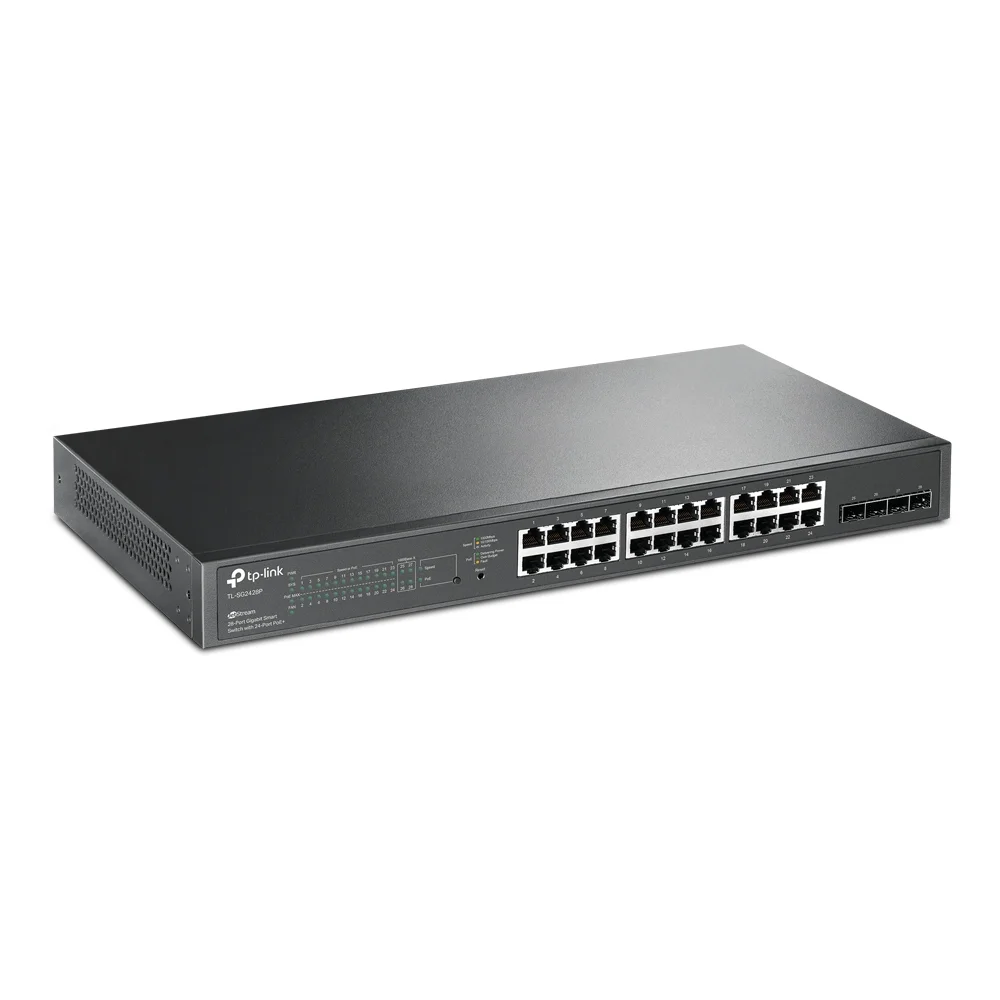
TP-Link Omada Access SG2428P 28-Port Gigabit Switch with 24-Port PoE+ is a smart-managed network switch designed for business networks, surveillance installations, offices, and enterprise access-layer deployments. It combines 24 Gigabit PoE+ RJ45 ports with 4 Gigabit SFP slots, providing wired connectivity for Ethernet devices and fiber-optic uplinks in one rack-mountable unit.
The SG2428P supports IEEE 802.3af/at PoE+, delivering up to 30W per PoE port with a total PoE power budget of 250W. This allows compatible IP cameras, wireless access points, IP phones, and other powered devices to receive network connectivity and electrical power through a single Ethernet cable.
As part of the Omada networking ecosystem, the switch supports centralized management through a compatible Omada SDN Controller, including cloud access and management through the Omada app. It also provides standalone management through its web interface, command-line interface (CLI), SNMP, and RMON.
Advanced networking capabilities include VLANs, access control lists (ACLs), QoS, IGMP Snooping, static routing, link aggregation, spanning tree, and IPv4/IPv6 support. These features enable administrators to segment traffic, prioritize network applications, improve internal traffic routing, and manage connected devices.
The SG2428P features a durable metal enclosure, rack-mountable construction, and two fans for cooling, making it suitable for structured network installations in offices, retail environments, surveillance systems, and other business networks.
Key Features
- 28-port configuration: 24 Gigabit PoE+ RJ45 ports and 4 Gigabit SFP slots
- 24 × 10/100/1000 Mbps PoE+ Ethernet ports
- 4 × Gigabit SFP slots for fiber-optic connectivity
- 250W total PoE power budget
- Up to 30W PoE output per port
- IEEE 802.3af/at PoE+ support
- Up to 56 Gbps switching capacity
- Up to 41.66 Mpps packet forwarding rate
- Omada SDN centralized management
- Cloud access and Omada app management through a compatible controller
- Standalone management via web, CLI, SNMP, and RMON
- Static routing
- VLAN and ACL support
- QoS and traffic prioritization
- IGMP Snooping and multicast management
- Link aggregation and spanning tree
- IPv4/IPv6 dual-stack support
- Security features including 802.1X, DHCP Snooping, and DoS Defend
- Fast PoE and Perpetual PoE
- Durable metal enclosure
- Rack-mountable design
- Two cooling fans
Buyer Use Case
Best For: Businesses, offices, hotels, retail stores, surveillance installations, and enterprise networks that need to connect multiple Ethernet devices while supplying PoE power to compatible equipment.
The SG2428P is particularly suitable for networks that need to power multiple IP cameras, wireless access points, and IP phones while maintaining Gigabit Ethernet connectivity. Its four SFP slots also provide options for compatible fiber-optic uplinks, while VLANs, QoS, ACLs, and static routing support more structured network management.
It is a suitable choice for network administrators who need more control over traffic, security, and connected devices than an unmanaged switch provides.
Specifications
Brand: TP-Link
Product Family: Omada Access
Model: SG2428P
Product Type: Smart-Managed Gigabit PoE+ Switch
Total Port Configuration: 28 ports
RJ45 Ports: 24 × 10/100/1000 Mbps
PoE+ Ports: 24
SFP Slots: 4 × Gigabit SFP
PoE Standard: IEEE 802.3af/at
Maximum PoE Power per Port: 30W
Total PoE Power Budget: 250W
Switching Capacity: 56 Gbps
Packet Forwarding Rate: 41.66 Mpps
Packet Buffer Memory: 4.1 Mbit
MAC Address Table: 8K entries
Jumbo Frame: Up to 9KB
Management Interfaces: Web, CLI, SNMP, RMON
Omada SDN Management: Supported with compatible controller
Routing: Static routing
VLAN: 802.1Q VLAN and other supported VLAN features
QoS: 802.1p CoS/DSCP with 8 priority queues
Multicast: IGMP Snooping, MLD Snooping, MVR
Security: ACL, 802.1X, RADIUS, DHCP Snooping, DoS Defend, Port Security
Link Aggregation: Supported
Spanning Tree: Supported
IPv6: IPv4/IPv6 dual stack
Cooling: 2 fans
Power Supply: 100–240V AC, 50/60Hz
Maximum Power Consumption: Depends on input voltage and connected PoE load; up to approximately 300W under specified full-PoE conditions
Dimensions: 440 × 220 × 44 mm
Mounting: Rack mount
Surge Protection: ±6 kV
Important Performance Limitation
PoE Power Limitation: The switch provides a maximum total PoE budget of 250W, with up to 30W per individual PoE port. The combined power requirements of connected PoE devices must remain within the available budget. Having 24 PoE+ ports does not mean that the switch can supply 30W to every port simultaneously.
Port Configuration Limitation: The advertised 28-port configuration consists of 24 RJ45 Ethernet ports plus 4 SFP slots. The four SFP slots are not additional RJ45 Ethernet ports, and compatible SFP modules may be required for fiber connections.
Speed Limitation: Each RJ45 port supports a maximum link speed of 1 Gbps, while the SFP slots support Gigabit SFP connectivity. The advertised 56 Gbps switching capacity represents the switch’s aggregate switching capacity, not the transfer speed of an individual device or connection.
Management Limitation: Centralized Omada SDN management requires a compatible Omada Controller. Cloud-based management and Zero-Touch Provisioning availability depend on the controller type, supported configuration, and applicable service requirements. The switch can also be managed independently using its supported standalone management interfaces.
Compatibility
The TP-Link Omada Access SG2428P is designed for compatible Gigabit Ethernet devices and network equipment, including:
- PoE-compatible IP cameras
- Wireless access points
- IP phones
- Network video recorders
- Desktop computers and workstations
- Network printers
- Servers and other Ethernet-enabled devices
- Compatible Gigabit SFP modules and fiber-optic links
- Compatible Omada gateways, switches, access points, and controllers
PoE power is available through the 24 PoE+ RJ45 ports for compatible IEEE 802.3af/at devices. Non-PoE Ethernet devices can use the RJ45 ports for data connectivity without requiring PoE power.
Fiber connectivity requires compatible SFP modules and matching fiber specifications. Advanced management and network functions depend on the connected equipment, firmware, and configuration.
Be the first to review “TP-Link Omada ACCESS SG2428P 28-Port Gigabit Switch with 24-Port PoE+”
You must be logged in to post a review.
Related products


Network




Reviews
There are no reviews yet.